


How can you stimulate hair growth?
We would all like hair that grows faster. In reality, the rate of growth is largely genetic — but a healthy scalp, a good diet and gentle care can create the best conditions to support it. Let’s take a closer look.
By the Luxéol team · Reading time: 6 min · Updated on 9 July 2026
Key takeaways
- Hair grows by an average of 1 to 1.5 cm per month, or around 12 to 15 cm per year — this rate is mainly determined by genetics, age and hormones.
- You cannot artificially “speed up” hair growth, but you can remove obstacles: deficiencies, an unbalanced scalp, breakage and overly harsh treatments.
- A varied diet covering protein, iron, zinc and B vitamins is the foundation of good hair growth.
- Zinc, selenium and biotin (vitamin B8) contribute to the maintenance of normal hair; targeted programmes are based on this foundation.
- A hair programme works from within, and it is recommended to take it for at least 3 months to act on all phases of the hair cycle.
- Persistently stalled growth or significant hair loss warrants advice from a doctor or dermatologist.
How fast does hair grow?
On average, hair grows by around 1 to 1.5 centimetres per month, or about twelve centimetres a year. This rate varies from person to person and depends on factors beyond our control: genetic makeup, age, sex, hormones and the season.
Hair follows a three-phase cycle. The growth phase (anagen) lasts several years: this is when the hair lengthens. It is followed by a short transition phase (catagen), then a resting phase (telogen), at the end of which the hair falls out to make way for a new one. At any given time, each hair is at a different stage — which is why losing 50 to 100 hairs a day is perfectly normal.
Understanding this cycle is key: “making hair grow faster” does not really make biological sense. The realistic goal is to preserve the duration of the growth phase and prevent hair from breaking before it has gained length.
Why is my hair growing slowly (or not at all)?
When you feel that your hair is “no longer growing”, it is rarely the growth rate itself that is the issue, but rather one or more obstacles that build up.
An unbalanced diet or deficiencies
Hair is made of keratin. A diet low in protein, iron, zinc or B vitamins can affect hair vitality. Restrictive diets and certain stages of life (pregnancy, menopause) particularly weaken this foundation.
An unbalanced scalp
Hair grows from the bulb, located in the scalp. An irritated, overly oily or dry scalp does not provide the best conditions. Caring for it means caring for the “soil” in which hair grows.
Breakage, which masks growth
Your hair may be growing normally… but breaking at the other end. Heat from styling tools, repeated colouring, harsh brushing and tight hair ties: all these habits wear down the hair fibre and give the impression that growth has stopped. See also our article on brittle hair.
Stress, fatigue and the seasons
Intense stress, an emotional shock, severe fatigue or a change of season can cause more hair to enter the shedding phase. These phenomena are most often temporary and reversible.
What habits promote hair growth on a daily basis?
No action will magically make hair grow faster, but together they create the conditions for healthy growth:
- Massage your scalp. A few minutes using your fingertips stimulates microcirculation and provides a real moment of relaxation.
- Be gentle when detangling. Detangle towel-dried hair from the ends towards the roots, using a soft brush.
- Limit heat. Lower the temperature of styling tools and apply a heat-protectant spray before blow-drying or straightening.
- Space out colouring and bleaching, which can weaken the hair fibre over time.
- Trim the ends regularly. This does not make hair grow faster, but prevents split ends from travelling up and breaking the lengths.
Which nutrients support normal hair?
Certain nutrients benefit from authorised health claims at European level: they do not “make hair grow” but contribute to the maintenance of normal hair or to functions related to it. Programmes are based on these nutrients, as well as on plants traditionally associated with hair vitality.
Nutrients & active ingredients to support normal hair
Recognised role / use |
Where to find it |
|||
|---|---|---|---|---|
Zinc |
Contributes to the maintenance of normal hair and normal protein synthesis |
Seafood, pumpkin seeds, legumes |
|
|
Selenium |
Contributes to the maintenance of normal hair and protects cells from oxidative stress |
Brazil nuts, fish, eggs |
|
|
Biotin (B8) |
Vitamin involved in normal metabolism; often associated with hair beauty |
Eggs, liver, whole grains |
|
|
Iron |
Contributes to reducing fatigue; a deficiency may affect hair vitality |
Red meat, lentils, spinach |
|
|
Rocket |
Plant traditionally associated with hair growth; acts at the hair bulb level (cosmetic/nutritional use) |
Targeted hair growth programmes |
|
|
Field horsetail |
Source of silica; traditionally associated with strengthening the hair fibre |
Strengthening programmes |
|
|
Before taking supplements, the ideal approach is to address any deficiencies through diet. If in doubt (fatigue, significant hair loss), a blood test prescribed by a doctor can help clarify matters.
How can you incorporate a programme into your routine?
A hair programme works from within, and it is recommended to follow it for at least 3 months to act on all phases of the hair cycle. It works best when combined with topical care that looks after the scalp and hair fibre.
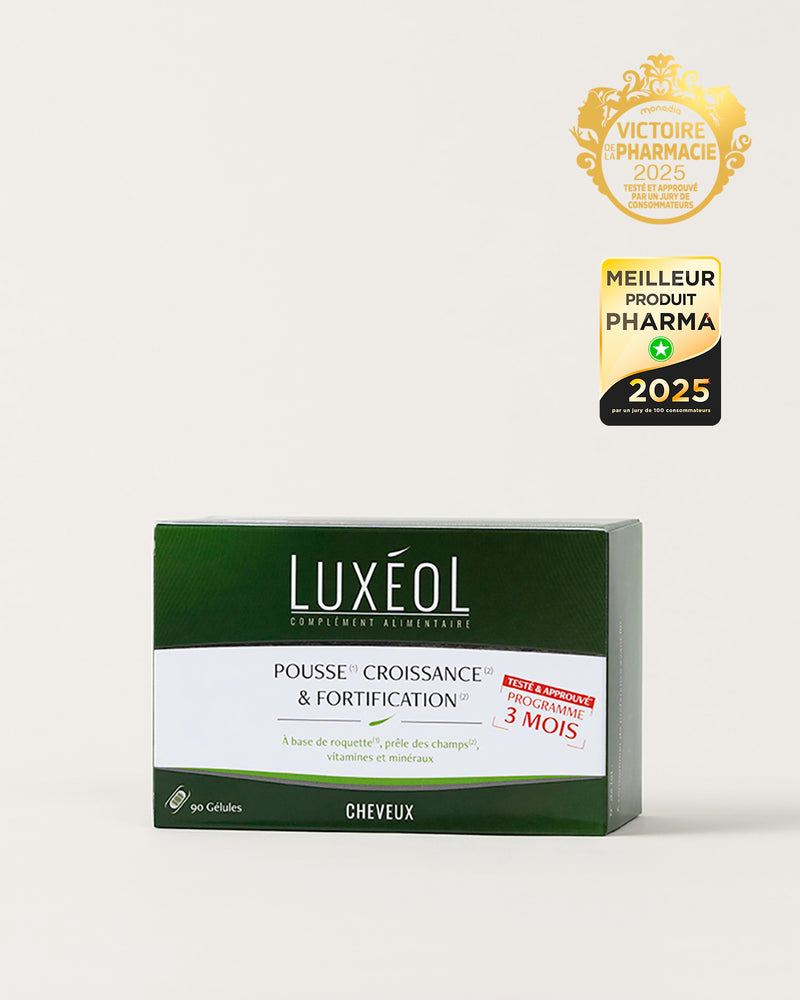
Luxéol Growth, Hair Growth & Strengthening
A triple-action formula based on rocket and field horsetail, supplemented with vitamins and minerals, to support denser, longer and stronger hair. 1 capsule per day, as part of a 3-month programme.

To work on the surface too, complement with a growth shampoo and, if hair is exposed to heat or colouring, a repair treatment. The idea is not to accumulate products, but to cover both aspects: nourishing the hair bulb and protecting the lengths.
Summary: supporting hair growth
In practice |
||||
|---|---|---|---|---|
Average rate |
≈ 1 to 1.5 cm / month (mainly genetic) |
|
|
|
Realistic goal |
Remove obstacles, not “speed up” growth |
|
|
|
Essential foundation |
Varied, balanced diet |
|
|
|
Active ingredients to prioritise |
Zinc, selenium, biotin; plants: rocket, horsetail |
|
|
|
Programme duration |
At least 3 months |
|
|
|
Key steps |
Healthy scalp, gentleness, less heat |
|
|
|
When to seek advice |
Growth persistently stalled or significant hair loss |
|
|
|
Frequently asked questions about hair growth
Can you really make your hair grow faster?
How long does it take to see results with a programme?
Does cutting your hair make it grow faster?
Does rocket make hair grow?
When should you consult a professional?
Food supplements should be used as part of a healthy lifestyle and are not a substitute for a varied, balanced diet. This article is for informational purposes only and does not constitute medical advice. In the event of significant, sudden or persistent hair loss, consult a healthcare professional.
Sources
- European Register of authorised health claims (EC Regulation No. 1924/2006) — claims relating to zinc, selenium and biotin.
- Ameli.fr — “Hair loss (alopecia): what should you do?”
- Vidal.fr — “Hair loss: hair care and food supplements.”
- French Society of Dermatology — information on the hair cycle and telogen effluvium.
In the same section





